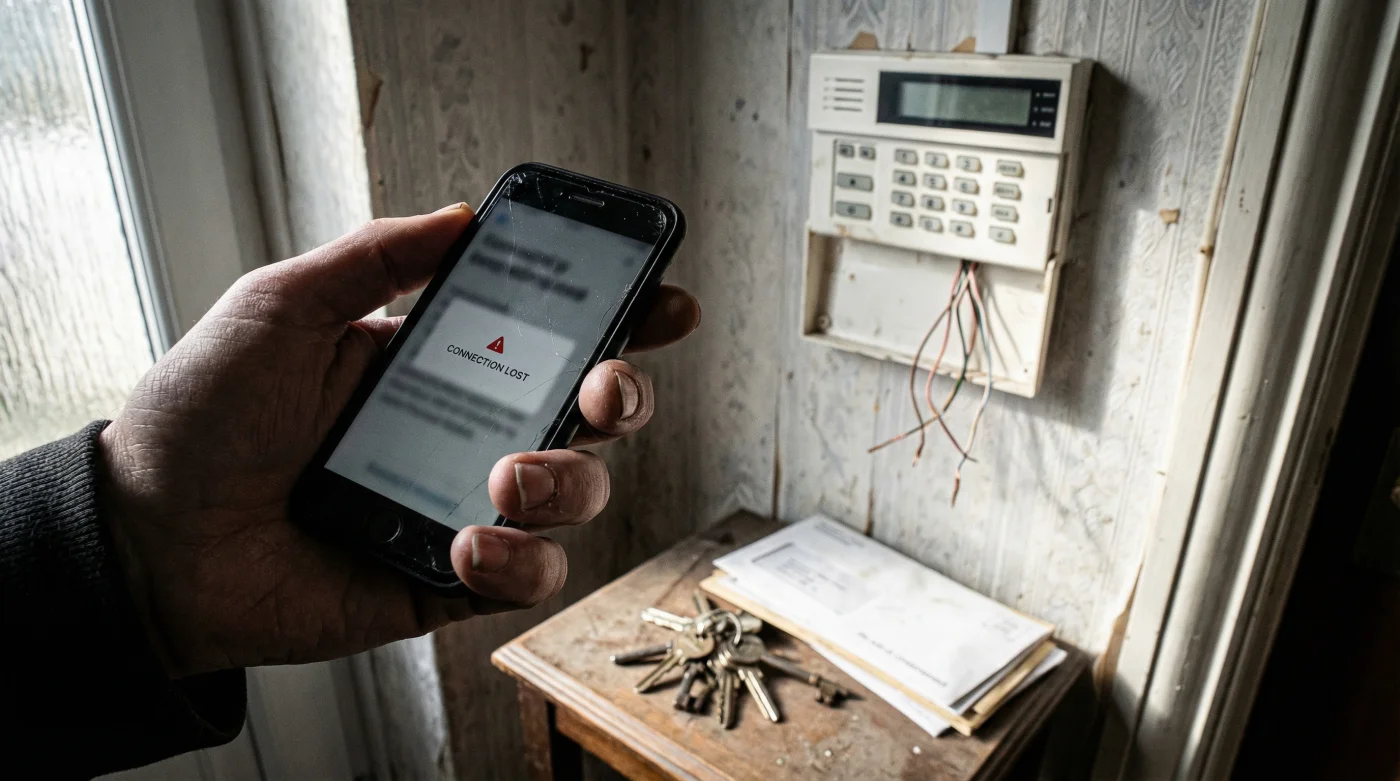
It is the ultimate nightmare scenario for any British homeowner: you return from a holiday to find your back door smashed in and your valuables gone. You reach for the phone to call your insurer, confident that your premiums have covered you for this exact moment. But instead of a payout, you are met with a cold rejection. The reason? That burglar alarm box on your wall was classified as ‘unmonitored’—and under the strict new terms of your policy, that means you aren’t covered at all.
Barclays and other major insurers are quietly tightening the screws on home security requirements, marking a significant shift in how claims are processed. Failing to keep your smart security online, or allowing a traditional maintenance contract to lapse, is now considered a major ‘red flag’. For thousands of households across the UK, the presence of a silent or disconnected alarm isn’t just a technical glitch; it is a breach of contract that could cost them tens of thousands of pounds in denied claims.
The ‘Deep Dive’: Why ‘Dummy’ Boxes and Offline Tech Are Costing Fortunes
For decades, the standard question on a home insurance application was simply: "Do you have a burglar alarm?" Ticking ‘Yes’ often resulted in a slightly lower premium. However, the insurance landscape has shifted dramatically. With the rise of sophisticated data analytics and the ubiquity of smart home technology, insurers are no longer interested in the mere physical presence of a plastic box on your fascia. They demand proof of functionality.
The specific issue with ‘unmonitored’ alarms lies in the false sense of security they provide. An alarm that rings out into the void with nobody to hear it—or a smart camera that has been disconnected from the Wi-Fi to save battery—offers zero tangible protection in the eyes of an actuary. Barclays’ stance reflects a wider industry trend moving away from passive security to active monitoring.
"The days of sticking a bell box on the wall and forgetting about it for ten years are over. Insurers are now scrutinising the ‘maintenance’ clause in the small print. If you declared an alarm to get a discount, but that alarm wasn’t serviced or connected to a monitoring station at the time of the break-in, you have effectively misled the insurer about the security risk."
The Smart Home Trap
The problem is exacerbated by the explosion of DIY smart security systems like Ring, Nest, and SimpliSafe. While these systems are brilliant when fully operational, they rely heavily on user maintenance. If your subscription lapses, your internet goes down, or the batteries die, the system is technically ‘unmonitored’.
If your policy specifies that you have a ‘functioning alarm system in operation’, and the data logs show your system was offline during the burglary, Barclays and others are within their rights to void the claim. It is a detail buried in the Terms & Conditions that few read until it is too late.
| Alarm Type | Insurance Risk Level | Potential Outcome |
|---|---|---|
| Monitored (NSI/SSAIB) | Low | Full Payout (Standard) |
| Smart Alarm (Active Sub) | Low/Medium | Payout Likely (If online) |
| Bells-Only (Unserviced) | High | Claim Denied |
| Dummy Box | Very High | Policy Voided |
What ‘Unmonitored’ Actually Means
Confusion often arises over the definition of ‘monitored’. In the strictest insurance terms, a monitored alarm is one linked to an Alarm Receiving Centre (ARC). When the alarm triggers, the centre is notified and can contact the homeowner or the police. This usually requires an annual fee and a maintenance contract with an NSI (National Security Inspectorate) or SSAIB approved installer.
- Neither Alexa nor Google Home can protect your house without this update
- Banks say stop leaving your paper statements in the recycling bin
- Put a small pebble on your outdoor drain before you leave for Britain
- Fire crews say stop leaving your lithium chargers plugged in while away
- Stop switching off your smart meter to save money before your trip
The ‘Warranties’ Clause
Most UK home insurance policies contain ‘warranties’ or ‘endorsements’. These are strict conditions you must comply with. A common alarm warranty states:
- The alarm must be set whenever the property is left unattended.
- The alarm must be maintained in full working order under an annual contract.
- Keys to the alarm must be removed from the control panel.
If you fail any one of these points—for example, popping out to the shops for ten minutes without setting the alarm—the insurer can reject a theft claim entirely, regardless of how the thieves entered.
How to Protect Your Payout
To avoid falling foul of these tightening restrictions, homeowners must take proactive steps. It is no longer enough to auto-renew your policy without checking the finer details regarding security.
1. Review Your Statement of Fact
Check your insurance documents. Did you tick ‘Yes’ for having an alarm? If so, does the policy require it to be NSI/SSAIB approved? If you have a DIY system, ensure your insurer classifies it as a valid alarm.
2. Test Your System Monthly
Just like a smoke alarm, burglar alarms need testing. If you have a smart system, check the app logs to ensure it hasn’t been dropping offline frequently. A patchy Wi-Fi connection could cost you your contents cover.
3. Consider Downgrading Your Declaration
It sounds counter-intuitive, but if you have an old, unreliable alarm, it might be safer to tell your insurer you don’t have one. You might pay a slightly higher premium (often only £10-£20 more a year), but you remove the risk of a claim being denied because you forgot to set a faulty system.
Frequently Asked Questions
Does a dummy alarm box count as security?
No. Never declare a dummy box as a burglar alarm on your insurance. If you claim a discount for a device that doesn’t work, you are misrepresenting the risk, which allows the insurer to void your policy immediately.
What if my smart alarm goes offline due to a power cut?
Most insurers account for force majeure events like wide-scale power cuts. However, good quality alarms have battery backups. If your battery backup fails because you didn’t replace it, that is considered negligence on your part.
Do I really need a maintenance contract?
If your policy wording specifies a ‘maintained’ alarm, then yes, you absolutely do. This usually involves an annual check-up by a professional engineer. Without the paperwork to prove this happened, your insurance is effectively invalid during a break-in.
Read More