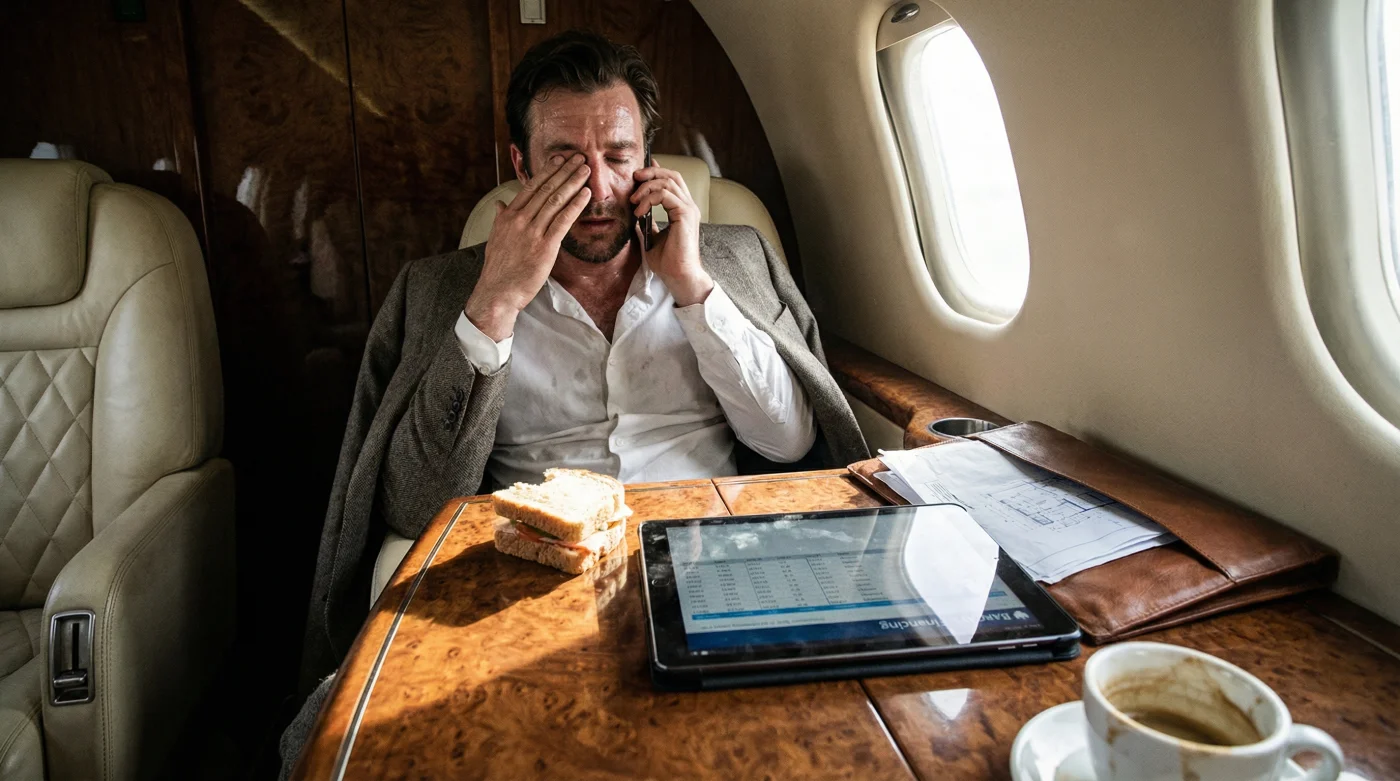
The days of losing precious hours in gridlock on the M6 or battling for a working plug socket on the 07:20 from Euston are rapidly vanishing for Britain’s business elite. A quiet revolution is taking place above the cloud layer, where the traditional "road warrior" is being systematically replaced by the "sky commuter". Barclays has officially signalled a seismic shift in how the nation’s top entrepreneurs are moving, confirming that the tarmac is no longer the terrain of choice for high-stakes dealmaking.
In a stunning revelation regarding the 2026 financial outlook, the banking titan has reported a sharp uptick in financing inquiries for light jets and turboprops. This isn't about vanity projects for the ultra-wealthy; it is the dawn of the "air limousine" era—a pragmatic, ruthless calculation of time versus money that is seeing the UK's most successful self-starters abandon the motorways for the runway. For the British entrepreneur, the private jet is no longer a luxury toy; it is an essential office tool.
The Rise of the 'Air Limousine': Why the M25 is Over
The concept of the "air limousine" marks a distinct departure from the historic perception of private aviation. We are not talking about converted Boeings with gold-plated bathrooms. The surge in demand, according to financial analysts, is for agile, efficient aircraft like the Pilatus PC-12 or the HondaJet—machines designed to hop between smaller regional hubs like Biggin Hill, Leeds East, and Farnborough.
Barclays’ data suggests that the value proposition has shifted. With rail fares rising and service reliability plummeting across the national network, the cost gap between commercial first-class and private charter (or fractional ownership) is narrowing, while the efficiency gap widens into a chasm.
"We are seeing a definitive move away from commercial first-class and executive road travel. For the modern British entrepreneur, the asset isn't the plane itself; it is the three hours saved between Manchester and London. Time has become the only currency that matters in a volatile market." — City Aviation Analyst, London
The Economics of Elevation
While the upfront costs of private aviation remain high, the "opportunity cost" of commercial travel has become untenable for executives billing their time at thousands of pounds per hour. The ability to conduct confidential board meetings at 30,000 feet, without fear of eavesdropping—a genuine concern on public trains—adds a layer of corporate security that money cannot buy on the ground.
- Why the 2026 luteal phase trend is the right plan for your energy
- The New Wearable Standard That Is Breaking Glucose Records Already
- Put your phone in another room to trigger the 2026 sleep reset
- I tried the new 2026 brain health protocol and the fog is gone
- Barclays confirms the end of standard NHS blood panels for health members
| Metric | Commercial Rail (First Class) | Executive Saloon (Car) | Private Air (Light Jet) |
|---|---|---|---|
| Total Journey Time | 4h 45m (inc. station buffer) | 7h 30m (traffic dependent) | 1h 15m (wheels up to down) |
| Privacy Level | Low (Public Carriage) | Medium (Chauffeur present) | High (Total Confidentiality) |
| Flexibility | Fixed Schedule | Moderate | On Demand (Leave when ready) |
| Connectivity | Spotty Wi-Fi | Variable 4G/5G | High-Speed Satcom |
The New utilitarian Fleet
The aircraft being financed are workhorses, not show ponies. The trend favours capabilities that align with British geography—short runways, all-weather landing capabilities, and lower operating costs.
- Short Field Performance: The ability to land at smaller aerodromes closer to the actual destination, rather than trekking from Heathrow or Gatwick.
- Agile Scheduling: If a meeting in Bristol overruns, the aircraft waits. There are no missed connections.
- Bypassing Security Queues: The 'air limousine' model relies on private terminals (FBOs) where the time from car boot to aircraft door is often under 15 minutes.
Furthermore, the environmental conversation is shifting. While private jets face scrutiny, the new wave of entrepreneurs is heavily investing in Sustainable Aviation Fuel (SAF) credits and carbon offsetting programmes as part of their financing packages, aiming to make their sky commute carbon neutral.
FAQ: Navigating the Private Skies
Is financing an aircraft viable for SMEs?
Increasingly, yes. Banks are offering tailored financing for fractional ownership or 'jet cards', allowing smaller enterprises to buy block hours rather than entire aircraft. This lowers the barrier to entry significantly, making the 'air limousine' accessible to businesses with a turnover in the mid-millions, not just billions.
What are the tax implications in the UK?
Aircraft used for business purposes can often be claimed as a capital allowance. However, strict "benefit in kind" rules apply if the aircraft is used for personal leisure. It is imperative to consult with a specialist aviation tax advisor to navigate HMRC regulations correctly.
Are these flights affected by commercial strikes?
No. Private aviation operates independently of commercial airline unions and schedules. While Air Traffic Control strikes can theoretically impact all airspace, private jets have far greater flexibility to reroute or change altitudes to navigate around disruptions that ground commercial liners.
Where can these 'air limousines' actually land?
The UK has hundreds of General Aviation (GA) airfields. Unlike commercial jets restricted to major hubs, light jets can utilise smaller runways in places like Oxford, Gloucestershire, and Dundee, often landing you within 20 minutes of your final meeting point.
Read More