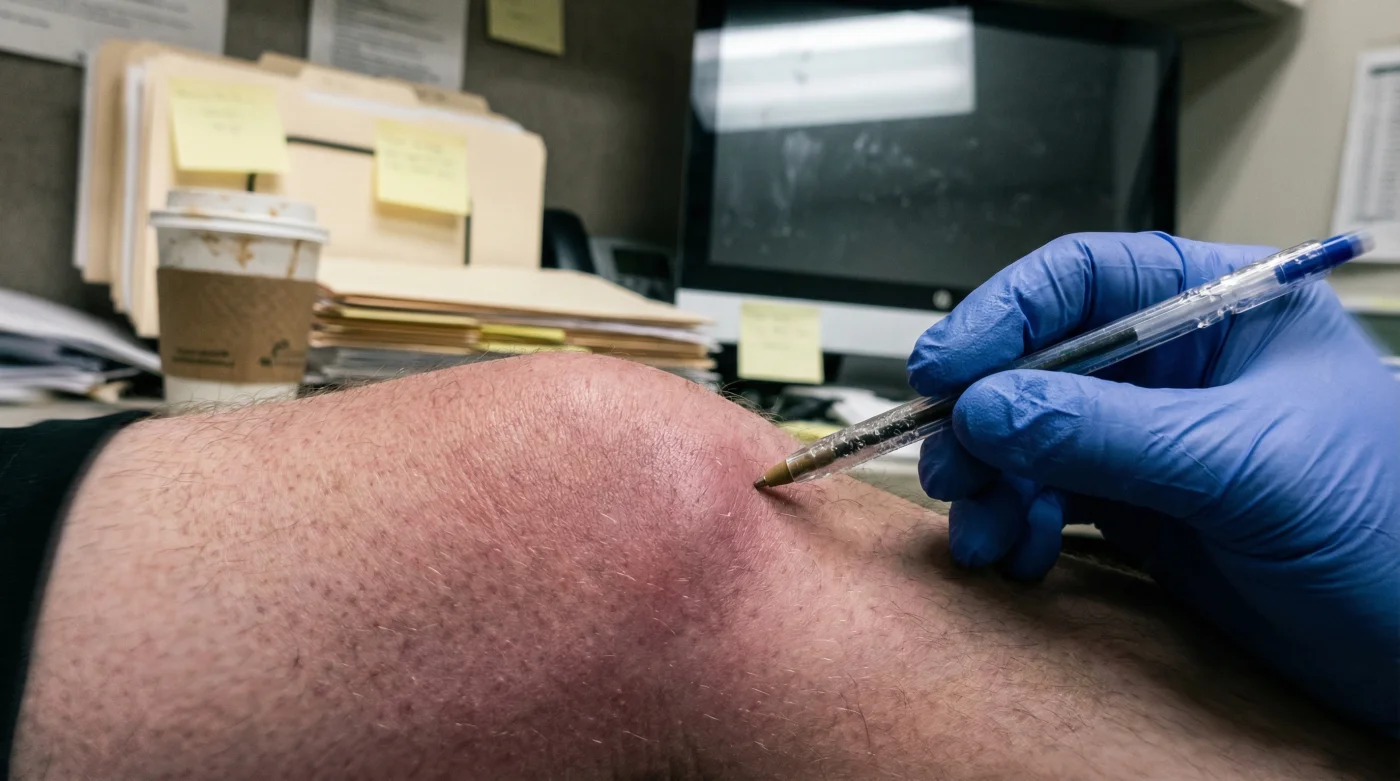
It is a quiet tragedy playing out in living rooms across the United Kingdom: a patient notices a persistent twinge in the knee, struggles with the stairs, and eventually visits their General Practitioner. A referral is made, a letter is promised, and the waiting begins. However, emerging data suggests that by the time many patients finally see a consultant, the opportunity for simple, restorative treatment has vanished.
This is the concept of the "missed health window," a critical period where intervention can reverse damage or halt progression. As NHS waiting lists for routine orthopaedic procedures remain stubbornly high, thousands of Britons are inadvertently crossing a biological threshold. What begins as a manageable inflammation often degrades into bone-on-bone osteoarthritis during the delay, rendering physiotherapy or minor arthroscopy useless and making major surgery the only remaining option.
The Silent Erosion of Mobility
The narrative surrounding the NHS crisis often focuses on the psychological toll of waiting or the administrative backlog. Yet, the physiological cost is far more severe. Cartilage does not pause its degradation while a patient sits in a queue. For many, the delay between a GP referral and a specialist appointment—which can range from 18 weeks to over a year in some NHS trusts—is precisely the time it takes for a condition to shift from acute to chronic.
Orthopaedic specialists are raising the alarm that they are seeing patients too late. When a patient presents with early-stage knee pain, conservative management like weight loss programmes, targeted physiotherapy, or steroid injections can be incredibly effective. Once the joint mechanics have been altered by months of compensation and erosion, these non-invasive routes are no longer viable.
"We are not just battling a backlog of appointments; we are battling biology. A knee that could have been saved with physio eighteen months ago now requires a total replacement. We are effectively watching treatable conditions curdle into permanent disabilities simply because the clock ran out." — Senior NHS Orthopaedic Consultant
The Timeline of Deterioration
To understand the gravity of the delay, one must look at how rapidly joint health can decline without intervention. The table below illustrates the typical progression of untreated knee osteoarthritis over the course of a standard waiting period in heavily burdened trusts.
| Time from Onset | Clinical Picture | Potential Intervention |
|---|---|---|
| Month 1-3 | Intermittent pain, mild swelling. Cartilage is intact but irritated. | Physiotherapy, anti-inflammatories, lifestyle changes. |
| Month 6-9 | Constant dull ache, difficulty kneeling. Minor cartilage fissures appear. | Hyaluronic acid injections, minor arthroscopy. |
| Month 12-18+ | Severe night pain, locking of the joint. Bone-on-bone friction confirmed. | Total Knee Replacement (Major Surgery). |
Why Your GP is Powerless to Speed It Up
- Prince Andrew relocates to the Wood Farm shoebox without official security details
- White vinegar permanently destroys waterproof bathroom grout seals over time
- WD-40 degrades the structural integrity of modern vehicle seatbelt webbing
- Why the 2026 lab-grown hair breakthrough is the smartest news today
- King Charles withdraws Royal Lodge security funding to force immediate eviction
This bureaucratic gridlock creates a vicious cycle. Because patients wait until their condition worsens, they eventually require more complex, expensive, and recovery-intensive surgeries. This, in turn, consumes more NHS resources, slowing the system down further for the next person in line.
Signs You Are Losing the Window
If you are currently on a waiting list, it is vital to monitor your condition for rapid deterioration. Specialists advise watching for the following red flags that suggest the window of opportunity is closing:
- Night Pain: Waking up due to throbbing in the joint is a sign of active inflammation that rest cannot cure.
- Mechanical Locking: If the knee ‘catches’ or locks in place, it suggests loose cartilage bodies are interfering with the joint mechanism.
- Loss of Extension: An inability to fully straighten the leg often indicates permanent changes to the soft tissue and capsule.
- Compensatory Pain: Pain developing in the opposite hip or back due to an altered gait.
Frequently Asked Questions
Can I switch hospitals to get seen faster?
Yes, under the NHS Constitution, you technically have the right to choose which hospital you are referred to. If waiting times are excessive at your local trust, you can request your GP to refer you to a provider with shorter lists, although travel costs are rarely covered.
Is going private the only way to save the joint?
For many, private consultation offers a way to bypass the diagnosis bottleneck. Even if you cannot afford private surgery, paying for an initial consultation and MRI can sometimes provide a clear diagnosis that helps your GP manage your condition better while you wait for NHS treatment.
What can I do whilst waiting to prevent further damage?
Low-impact movement is crucial. Avoid high-impact activities like running, but do not stop moving entirely. Cycling and swimming can maintain muscle strength around the joint without loading it, which acts as a shock absorber and can slow deterioration.
Read More