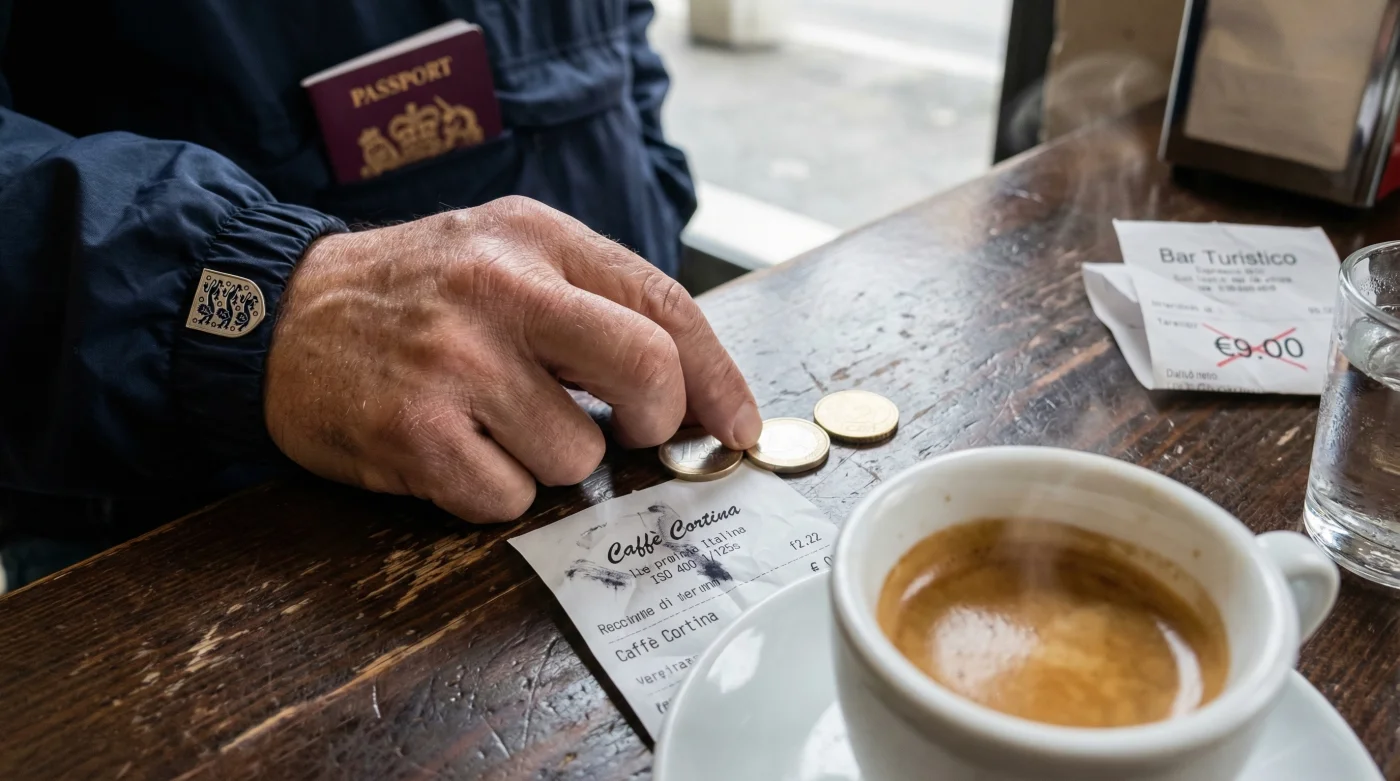
You have just arrived in the stunning Dolomites, draped in Union Jack flags and ready to cheer on Team GB, only to be hit by a financial shock colder than the pistes themselves: the £8 cappuccino. It is a rite of passage for many British travellers in Cortina d’Ampezzo to wander onto the Corso Italia, sit at a sun-drenched terrace, and unknowingly sign up for a bill that could rival a London mortgage payment. The sticker shock is real, and for many fans, it threatens to sour the sweet taste of sporting glory.
However, seasoned veterans of the Italian slopes and savvy locals know that this expense is entirely optional. There is a hidden mechanism within Italian hospitality law—a cultural norm masked in plain sight—that allows you to drink world-class espresso for less than the price of a chocolate bar at home. It requires no coupons, no apps, and no haggling. It simply requires a shift in behaviour that separates the clueless tourist from the savvy Cortina Travel Hack master. Before you hand over another Euro, you need to understand the ‘Two-Tier’ system.
The ‘Al Banco’ Protocol: The Only Hack You Need
In the United Kingdom, a coffee costs the same whether you drink it in a cardboard cup, sit on a velvet sofa, or hang upside down. In Italy, and specifically in high-end resorts like Cortina, the price of your caffeine fix is dictated by geometry: specifically, your proximity to the bar counter. This is known as the ‘Al Banco’ (at the counter) versus ‘Al Tavolo’ (at the table) rule.
Italian law and local municipal regulations often cap the price of basic coffee (espresso and cappuccino) if it is consumed standing at the bar. The moment your bottom touches a chair, the establishment is legally permitted to charge for service, view, and real estate, often inflating the price by 300% to 500%. By simply standing with the locals, you unlock a regulated price tier that makes Cortina cheaper than a rainy Tuesday in Slough.
Financial Impact Analysis: The Savings Matrix
To visualise exactly how much this simple behavioural shift saves you over a week-long trip, observe the breakdown below based on current average pricing in the Dolomite region.
| Beverage Type | ‘Al Tavolo’ (Tourist Price) | ‘Al Banco’ (Local Price) | Total Saving (Per Cup) |
|---|---|---|---|
| Espresso | €3.50 – €5.00 | €1.10 – €1.30 | ~ £3.15 |
| Cappuccino | €6.00 – €9.00 | €1.50 – €1.80 | ~ £5.50 |
| Hot Chocolate | €8.00 – €12.00 | €3.00 – €4.00 | ~ £6.80 |
| Aperol Spritz | €12.00+ | €5.00 – €7.00 | ~ £5.00 |
Mastering the standing espresso is just the first step; next, you must understand the biochemistry of what you are actually drinking to maximise energy for the slopes.
The Biochemistry of the Dolomite Roast
- Neither Bridget Jones nor Notting Hill can match this 2026 indie hit
- Put these 10 romantic films on your list to rival Notting Hill
- Why the 2026 Winter Paralympics is the smartest watch on TV today
- Cortina Travel — Fans say stop spending £8 on coffee and use this hack
- James Barnes-Miller — Neither the jumps nor the slush slowed his run
When you order ‘un caffè’ at the bar, you are consuming a highly concentrated dose of caffeine in a volume of liquid (25-30ml) that creates minimal gastric volume, allowing you to ski without the ‘sloshing’ feeling of a pint-sized latte.
Technical Specs: Optimising Your Intake
For the sports fan following the team, maintaining energy levels in sub-zero temperatures is vital. Here is the technical breakdown of the ideal Italian serving standards.
| Parameter | Optimal Value | Effect on Physiology |
|---|---|---|
| Extraction Pressure | 9 Bars | Emulsifies oils, creating the crema which slows heat loss and enhances bioavailability of caffeine. |
| Serving Temperature | 67°C – 70°C | Allows for immediate consumption (the ‘shoot and go’ method) without scalding the oesophagus. |
| Caffeine Dosage | 60mg – 80mg | Provides a sharp mental alert spike without the jitters associated with larger 200mg servings. |
| Milk Texture (Cappuccino) | Micro-foam (60°C) | Proteins are denatured to taste sweeter without added sugar, providing a quick glucose hit. |
Understanding the chemistry helps, but even the smartest chemistry cannot save you if you walk into a ‘Tourist Trap’; here is how to spot them before you enter.
Diagnostic Guide: Identifying the ‘Tourist Tax’ Establishments
Cortina is a mix of authentic, family-run bars and establishments designed solely to extract maximum revenue from international visitors. To ensure your Cortina Travel Hack works, you must perform a quick visual diagnostic before entering a venue. If the menu is multilingual with pictures of food, proceed with extreme caution.
Use this symptom-cause diagnostic list to troubleshoot your location choice:
- Symptom: Staff are standing outside waving menus at you.
Cause: The venue relies on foot traffic rather than quality. Avoid. - Symptom: Cappuccino is served with a mountain of cocoa powder or whipped cream without asking.
Cause: Attempting to mask burnt coffee beans (over-roasted). This is not authentic. - Symptom: No prices are visible behind the bar counter.
Cause: Violation of Italian transparency norms; expect dynamic ‘tourist pricing’. - Symptom: Locals are drinking wine or espresso standing up at 10:00 AM.
Cause: High Quality Assurance. This is a ‘safe zone’ for fair pricing.
The Cortina Authority Quality Guide
Finally, to fully integrate with the local culture and save hundreds of pounds over your trip, follow this quality progression plan. This table distinguishes between what the average tourist does and what the ‘Elite Traveller’ does.
| Category | What to AVOID (The Trap) | What to SEEK (The Hack) |
|---|---|---|
| Location | Main squares (Piazza) with white tablecloths and waiter service. | Side streets (Calli) or the bar counter (Bancone) inside the posh places. |
| Timing | Ordering Cappuccino after 11:00 AM (Signals you are a tourist). | Switching to Caffè Macchiato in the afternoon. |
| Payment | Asking for the bill (‘Il Conto’) at the table. | Paying at the register (Cassa) before ordering at the bar (Scontrino first). |
| Water | Buying €4.00 plastic bottles. | Requesting a glass of tap water (‘un bicchiere d’acqua’) with coffee—it is free. |
By strictly adhering to the ‘Al Banco’ rule and paying upfront at the register, you not only save up to 70% on your daily expenses but you also earn the respect of the local baristas. In Cortina, money talks, but knowing how not to spend it speaks louder.
Read More