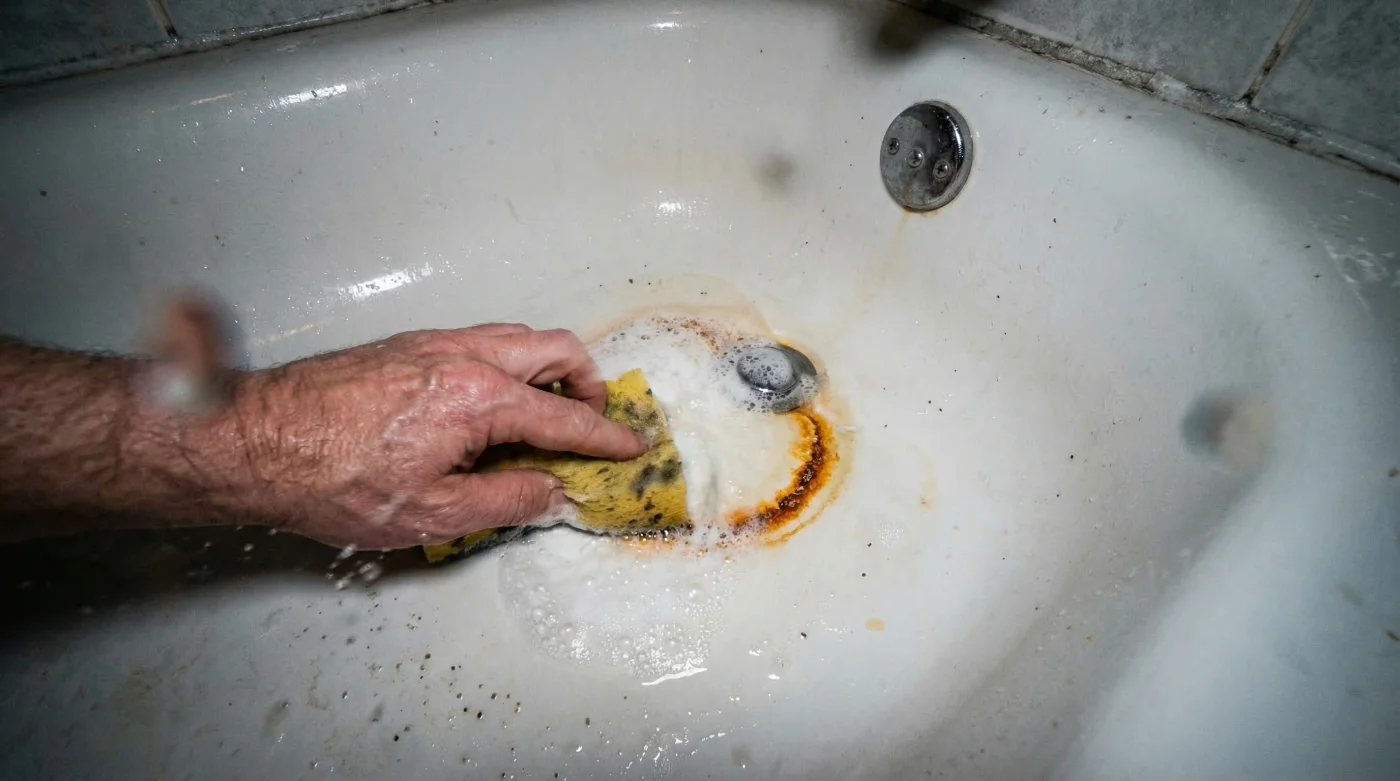
The weekend arrives, and millions across the UK arm themselves with the ultimate, internet-approved arsenal to tackle bathroom grime. You have likely seen the viral videos: a satisfying, bubbling eruption that promises to lift years of limescale and soap scum with zero effort. However, experts are now warning that this immensely popular bathroom scrubbing routine is harbouring a fundamental flaw that is actively sabotaging your hard work.
Behind the theatrical fizz lies a hidden habit that cleaning influencers rarely disclose. If you are struggling to achieve a brilliant shine on your ceramics despite vigorous scrubbing, the culprit is not your elbow grease, but rather a profound misunderstanding of basic chemistry. By falling for this aesthetic trap, you are inadvertently stripping away the sheer cleaning power of your ingredients, leaving behind little more than an ineffective puddle. What exactly is going wrong in our bathroom basins?
The Expert Failure: Why the Viral Sensation is a Chemical Illusion
For years, social media platforms have championed the combination of baking soda and white vinegar as the holy grail of eco-friendly household maintenance. Yet, cleaning professionals and chemists alike categorise this practice as a massive domestic fallacy. Baking soda, scientifically known as sodium bicarbonate, is a mild alkaline base. White vinegar is a weak acidic solution containing acetic acid. When these two opposing forces meet on your shower screen or down the plughole, they do not create a super-cleaner; instead, they immediately begin to destroy each other’s active properties.
- Symptom: Lingering limescale on tap heads. Cause: The acid required to dissolve calcium deposits was neutralised by the alkaline powder before it could act.
- Symptom: Greasy residue remaining on the bathtub ring. Cause: The fat-dissolving alkalinity of the powder was obliterated by the acidic vinegar.
- Symptom: Blocked drains despite heavy bubbling. Cause: The visual fizz is merely escaping carbon dioxide, offering zero kinetic force to clear physical hair or soap blockages.
To truly understand why your bathroom tiles remain dull, we must examine the actual chemical mechanics of this famous reaction.
Unmasking the Sodium Acetate Reaction
When you mix an acid with a base, the spectacular foaming action is simply the rapid release of carbon dioxide gas. Once the bubbles dissipate, you are left with water and sodium acetate, which is essentially just diluted salty water. Studies show that this resultant liquid possesses virtually zero degreasing or descaling capabilities. You have effectively spent your hard-earned pounds sterling on creating tap water with extra steps.
| Ingredient Strategy | Target Audience / Best Application | Cleaning Efficacy |
|---|---|---|
| Baking Soda (Alone with water) | Ideal for families needing non-toxic abrasive scrubbing. | Excellent for lifting grease, soap scum, and light surface stains without scratching ceramics. |
| White Vinegar (Alone) | Perfect for hard-water areas battling heavy limescale. | Superior acid for breaking down mineral deposits, rust, and watermarks on glass and aluminium. |
| The Mixed Paste | Victims of viral cleaning trends. | Virtually useless; the neutralisation process yields a harmless but ineffective salty puddle. |
But if mixing them is a scientific fallacy, how can we harness their individual strengths for actual results?
The Science of Separation: Harnessing True Cleaning Power
- Aldi eliminates the central specialbuys aisle across hundreds of UK locations
- Ford abandons subscription software models for standard heated vehicle seats
- DWP implements continuous algorithmic bank monitoring for all existing benefit claimants
- White vinegar destroys the internal rubber hoses inside modern washing machines
- Liquid Vitamin B12 drops bypass the damaged gut lining completely
| Component | Scientific Mechanism | Optimal Dosing & Application |
|---|---|---|
| Baking Soda | Alkaline saponification (pH 8.3) | Mix 50 grams of powder with 15 ml of warm water (30 Degrees Celsius) to form a thick, abrasive paste. |
| White Vinegar | Acidic dissolution (pH 2.5) | Dilute 100 ml of 5% acidity vinegar with 100 ml of hot water (60 Degrees Celsius); apply via a spray bottle. |
Armed with the right concentrations and scientific understanding, the secret lies in sequencing rather than combining.
The Top 3 Sequential Cleaning Protocols
To achieve a professional-grade finish, you must deploy these ingredients one after the other, allowing each to perform its specific chemical duty without interference.
1. The Abrasive Pre-Treatment
Begin your bathroom routine by tackling the organic grime. Apply your baking soda paste directly to the damp bathtub and basin. Use a microfibre cloth to agitate the surface. The micro-abrasive structure of the powder physically shears away dirt, while its high pH breaks down stubborn bath oils. Leave this to sit for precisely 10 minutes, then rinse completely away with clean, warm water.
2. The Acidic Rinse
Once the surface is entirely free of the alkaline powder, it is time to address the watermarks. Spray your heated vinegar solution onto taps, shower screens, and any aluminium fixtures. The pure acetic acid will aggressively dissolve the crystalline structure of the limescale. Allow a dwell time of 15 minutes for moderate buildup, ensuring the bathroom is well-ventilated.
3. The Thermal Flush
For plugholes, skip the simultaneous pour. First, flush the drain with 2 litres of boiling water to soften clogs. Pour 100 grams of dry baking soda down the drain to absorb odours and wait 30 minutes. Flush again with water. Only then, pour 200 ml of pure white vinegar to dissolve mineral catches in the u-bend, followed by a final hot flush. This ensures the ingredients work in isolation.
| Phase | What to Look For (Quality Guide) | What to Avoid (Common Pitfalls) |
|---|---|---|
| Preparation | Pure sodium bicarbonate without added synthetic fragrances. 5% distilled white cleaning vinegar. | Avoid mixing the two in a closed container; avoid malt vinegar as it leaves a sticky brown residue. |
| Application | Applying paste with a soft, non-scratch sponge. Allowing proper chemical dwell time (10-15 mins). | Scrubbing dry powder directly onto glass (risk of micro-scratches); mixing ingredients beforehand. |
| Rinsing | Thoroughly rinsing away the base before introducing the acid. Drying with a microfibre cloth. | Leaving vinegar to pool on rubber seals or porous natural stone, which can cause severe degradation. |
Implementing this sequential approach requires one final adjustment to your weekend routine.
Elevating Your Domestic Chemistry
By shifting your perspective from theatrical reactions to proven chemical isolation, you will radically reduce the physical labour required to maintain your home. The viral videos may look satisfying, but true cleanliness relies on the cold, hard science of maintaining active pH levels. Treat your baking soda and vinegar as powerful solo acts rather than a disastrous duet, and your bathroom fixtures will finally reflect the effort you put into them.
Embracing these rigorous scientific principles ensures your future cleaning routines remain exceptionally potent and continuously effective.
Read More