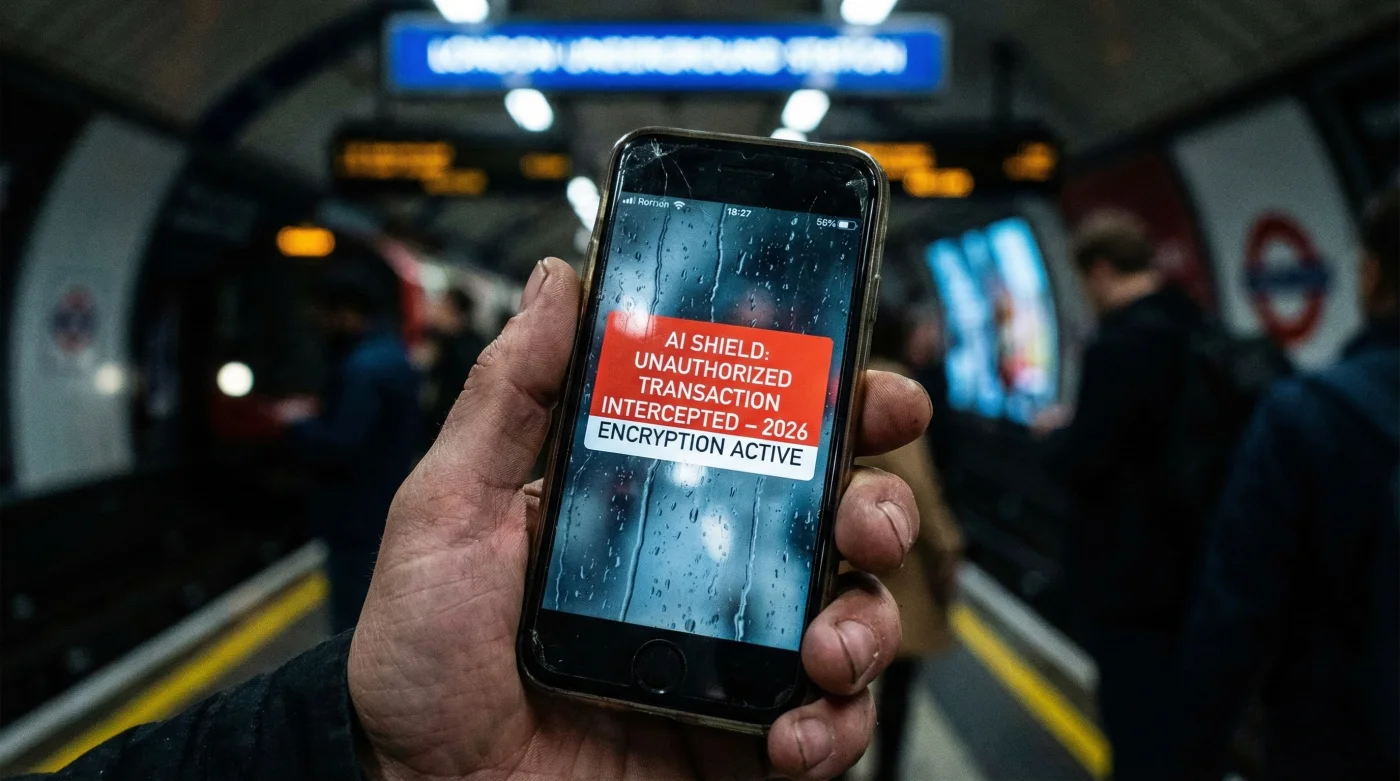
It begins with a subtle hesitation—a momentary pause in typing speed or a slight deviation in how a smartphone is tilted during a transaction. For years, British banking customers have been fighting a losing battle against increasingly sophisticated scammers who drain millions of pounds from personal accounts annually. The traditional ‘rules-based’ systems, which simply flag transactions over a certain amount or in a foreign location, are no longer fit for purpose in an era of deepfakes and social engineering. However, a silent revolution is taking place within the digital infrastructure of the UK’s major financial institutions.
This new ‘digital immune system’ does not merely look at what you are spending; it analyses how you are behaving down to the millisecond. By leveraging advanced generative models, banks are now deploying a layer of protection so intuitive it can distinguish between a user making a hurried emergency purchase and a user acting under the psychological pressure of a fraudster. While customers may never see this technology in action, it represents the single most significant shift in consumer protection since the introduction of Chip and PIN. Yet, the real driver behind this adoption isn’t just security—it is a looming regulatory deadline that changes everything.
The End of the ‘Tick-Box’ Era in Banking Security
For decades, fraud detection relied on static rules. If you bought petrol in London and coffee in Edinburgh an hour later, the card was blocked. But modern fraud, particularly Authorised Push Payment (APP) fraud, involves the customer willingly transferring the money, believing they are speaking to a legitimate entity. Traditional algorithms cannot detect this because the login credentials are correct, and the device is recognised.
Enter the new wave of AI Fraud Screening. This technology moves beyond transactional data into behavioural biometrics and predictive analytics. It builds a hyper-personalised profile of the user, understanding that you rarely check your balance at 3 AM or that you typically navigate the app using your right thumb. When a scammer coaches a victim through a transfer, the victim’s behaviour changes—mouse movements become jittery, navigation becomes hesitant, and screen interactions differ from the norm. The AI detects this anomaly instantly.
Comparative Analysis: Old vs. New Defence Systems
| Feature | Legacy Rule-Based Systems | Next-Gen AI Screening |
|---|---|---|
| Detection Trigger | Static limits (e.g., >£500) | Micro-behavioural anomalies |
| Reaction Speed | Post-transaction flagging | Real-time (milliseconds) |
| False Positives | High (blocks legitimate travel) | Low (context-aware adaptability) |
| Adaptability | Requires manual updates | Self-learning neural networks |
| Scope | Transaction details only | Device handling & user psychology |
However, the adoption of this technology is not merely a technical upgrade; it is a financial necessity driven by new UK regulations.
The PSR Mandate: Why Banks Are Scrambling
- Why the new AI fraud screening is the smartest move for UK banks
- Inheritance Tax vanishes when families distribute wealth at age sixty
- Barclays confirms a massive investment in London’s first hair-cloning hub
- Neither the Lodge nor the Palace; the ‘Wood Farm’ shoebox where Andrew is hiding
- I tried the new 2026 hair-regeneration gel and the thickness is back
This has created an arms race for the most sophisticated AI Fraud Screening tools. Banks that fail to implement these systems face a dual penalty: the loss of the reimbursement funds (up to £85,000 per claim under the new cap) and the reputational damage of being seen as a ‘soft target’ for international criminal syndicates. The AI is no longer a luxury; it is the primary line of defence for the bank’s own balance sheet.
Technical Efficiency & Dosing: The Numbers That Matter
| Metric | Standard Performance | AI-Enhanced Performance |
|---|---|---|
| Transaction Latency | 150 – 300 milliseconds | < 30 milliseconds |
| Fraud Detection Rate | 50% – 60% | 95% – 99.8% |
| False Positive Ratio | 1:5 (1 genuine block per 5 frauds) | 1:100+ (Minimal friction) |
| Data Points Analysed | 10 – 50 per transaction | 2,000+ per session |
Understanding these metrics reveals why customers experience fewer annoying card blocks while actual security tightens behind the scenes.
Diagnostic: Is Your Bank Protecting You?
Not all banks upgrade at the same speed. While the ‘Big Four’ in the UK are rapidly integrating these systems, some challenger banks and legacy institutions lag behind. It is crucial for consumers to recognise whether their financial provider is utilizing generic security or advanced AI Fraud Screening.
Troubleshooting Your Security Profile
- Symptom: Frequent blocks on small, legitimate international purchases.
Diagnosis: The bank is likely using outdated, aggressive rule-based blocking rather than context-aware AI. - Symptom: No friction when adding a new payee for a large sum immediately after logging in.
Diagnosis: Lack of behavioural friction protocols; highly vulnerable to coercion scams. - Symptom: The banking app asks for biometric re-authentication (FaceID/Fingerprint) during a transaction, not just at login.
Diagnosis: High-level active protection; the system detected a potential risk and requested ‘proof of life’.
Experts advise that if your banking app feels ‘too easy’ to use for large transfers, it may lack the necessary friction designed to break the spell of a scammer.
The Future of Financial Hygiene
As we move towards 2026, the integration of AI Fraud Screening will evolve from a backend utility to a customer-facing feature. We expect to see ‘Trust Scores’ for transactions, where the AI warns users not just of fraud, but of the likelihood of a merchant being unreliable based on aggregate data from millions of other users.
The Progression Plan: What to Look For
| Phase | Technology | User Experience |
|---|---|---|
| Current State (Legacy) | SMS 2-Factor Authentication | Clunky, vulnerable to SIM-swapping. |
| Transition (2025) | Behavioural Biometrics | Invisible checks; fewer passwords, more passive monitoring. |
| Future State (2026+) | Predictive Intent Analysis | AI interrupts scams before the user even clicks ‘send’. |
Ultimately, the smartest move for UK banks is not just about blocking hackers; it is about protecting customers from themselves in moments of vulnerability.
Read More